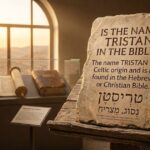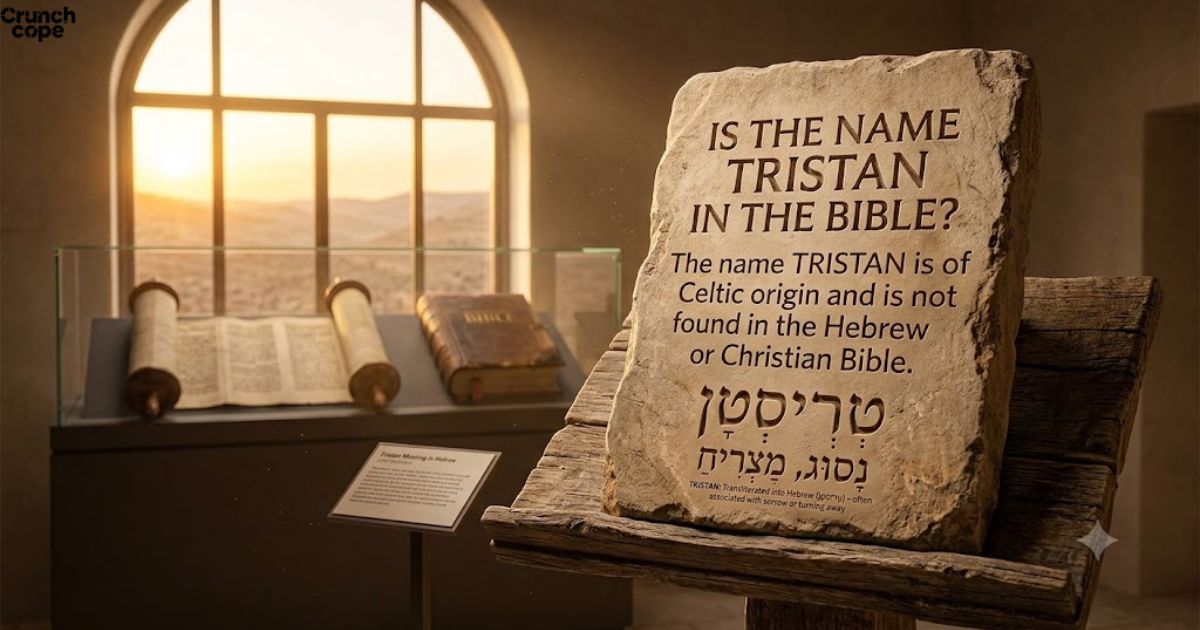
Choosing a baby’s name is one of the most meaningful decisions parents make. Many Christian families look for names that reflect faith, hope, and biblical values. If you’re considering the name Tristan, you may wonder: Is the name Tristan in the Bible?
The simple answer is no. Tristan is not mentioned anywhere in the Old Testament or the New Testament. However, that doesn’t mean the name lacks spiritual value. Many beloved Christian names today are not found in Scripture, yet they still carry beautiful meanings and can reflect biblical principles.
The name Tristan has an interesting history that stretches from ancient Celtic culture to medieval Christian Europe. Even though it isn’t a biblical name, its commonly accepted meaning often linked with sorrow or sadness connects with several powerful themes found throughout the Bible. Scripture repeatedly shows that God transforms sorrow into joy, weakness into strength, and brokenness into hope.
In this guide, we’ll explore Tristan’s true origins, examine whether it’s found in the Bible, uncover its spiritual symbolism, discuss its connection to medieval legends, and share meaningful Bible verses that can inspire anyone who bears this name.
The Real Origin of Tristan: Celtic Roots Meet Christian Europe
Unlike names such as David, Sarah, or Joshua, Tristan did not originate from Hebrew or Greek. Instead, historians believe its roots lie in medieval Europe, where Celtic traditions, Latin language, and Christian culture blended together over centuries.
Scholars continue to debate Tristan’s exact origin, but two major theories have become widely accepted.
The Latin Connection
One popular theory connects Tristan with the Latin word tristis, which means “sad,” “sorrowful,” or “full of grief.”
During the Middle Ages, Latin influenced many European languages and naming traditions. Because of this influence, some believe the name Tristan became associated with someone who experiences sorrow or carries a serious, thoughtful spirit.
It’s important to understand that this Latin connection does not make Tristan a biblical name. Although the Bible was translated into Latin through the famous Latin Vulgate, the name Tristan itself never appears in any biblical manuscript.
Instead, its connection to sorrow simply creates an interesting bridge to one of the Bible’s recurring themes: God meeting His people during seasons of pain and bringing redemption through suffering.
Also read: Tristan Name Meaning Bible: A Spiritual and Biblical Insight
The Celtic Alternative
Another respected theory traces Tristan back to the ancient Celtic name Drustan or Drystan.
This name appeared among the Picts and other Celtic peoples long before Christianity spread throughout Britain. Over time, pronunciation changed as different languages mixed, eventually producing the form “Tristan.”
Rather than carrying a specifically religious meaning, the Celtic version was associated with warriors and noble families.
As Christianity spread across Britain and France, many existing names continued to be used. Rather than replacing every traditional name, Christians often gave familiar names new spiritual significance through faithful living.
This explains why Tristan eventually became common among Christian families despite having non-biblical origins.
Medieval Synthesis
By the twelfth century, Tristan had become famous through medieval European literature, particularly the story of Tristan and Isolde.
During this period, Christian Europe blended older Celtic legends with medieval culture. Writers preserved many ancient stories while adapting them for Christian audiences.
Although these tales were written within Christian societies, they should not be confused with biblical history or Christian doctrine.
This historical blending explains why many people mistakenly assume Tristan has biblical origins. In reality, the name gained popularity through literature and medieval culture not through Scripture itself.
Is the Name Tristan in the Bible?
The answer is clear:
No, Tristan does not appear anywhere in the Bible.
It is absent from:
- The Hebrew Old Testament
- The Greek New Testament
- The Latin Vulgate
- Popular English translations including the KJV, NIV, ESV, NKJV, NASB, and CSB
Since Tristan developed centuries after most biblical names were established, it could not have appeared in Scripture.
However, this should not discourage Christian parents.
Many popular names today are not biblical names, including:
- Madison
- Ashley
- Tyler
- Kimberly
- Mason
- Hunter
Likewise, some names that Christians commonly use are inspired by Christian history rather than directly appearing in the Bible.
The Bible never commands believers to choose only biblical names for their children. Instead, Scripture emphasizes raising children to know and love God.
A child’s faith, character, and relationship with Christ matter far more than whether their name appears in the Bible.
Biblical Themes That Mirror Tristan’s Meaning
Although Tristan is not found in Scripture, its traditional association with sorrow beautifully reflects several biblical truths.
Throughout the Bible, sorrow is never portrayed as the end of the story. Instead, God repeatedly transforms pain into blessing.
Sorrow as Sacred Pathway
Many of God’s greatest servants walked difficult roads.
Job lost nearly everything before witnessing God’s restoration.
David spent years fleeing from King Saul before becoming Israel’s greatest king.
Joseph endured betrayal, slavery, and imprisonment before becoming Egypt’s ruler.
Most importantly, Jesus Himself experienced rejection, suffering, and the cross before His resurrection.
Isaiah 53:3 describes Christ as:
“He was despised and rejected by mankind, a man of sorrows, and familiar with suffering.” (NIV)
This verse reminds us that sorrow itself is not sinful. Rather, God often works through difficult seasons to accomplish His greatest purposes.
If Tristan reminds us of sorrow, Christians can also remember God’s promise to redeem every hardship.
Tears That Water New Growth
One of the Bible’s most encouraging promises appears in Psalm 126.
Psalm 126:5–6 (NIV)
“Those who sow with tears will reap with songs of joy. Those who go out weeping, carrying seed to sow, will return with songs of joy, carrying sheaves with them.”
This beautiful picture teaches that today’s tears can become tomorrow’s harvest.
Life includes disappointment, heartbreak, and loss.
Yet God often uses those very experiences to build compassion, maturity, wisdom, and stronger faith.
The story of Joseph perfectly illustrates this truth. Everything that seemed painful eventually became part of God’s greater plan to save countless lives.
The Blessing Hidden in Brokenness
The world usually views weakness as failure.
The Bible teaches something completely different.
Jesus said:
Matthew 5:4 (NIV)
“Blessed are those who mourn, for they will be comforted.”
This promise reminds believers that God’s comfort is especially near during seasons of grief.
Isaiah echoes the same hope.
Isaiah 61:3 (NIV)
“…to bestow on them a crown of beauty instead of ashes, the oil of joy instead of mourning, and a garment of praise instead of a spirit of despair.”
God specializes in turning broken situations into beautiful testimonies.
Prophetic Voices of Lament
Some of Scripture’s greatest books are filled with honest emotion.
Jeremiah became known as the “weeping prophet.”
David wrote numerous psalms expressing fear, grief, disappointment, and hope.
Even Jesus wept at the tomb of Lazarus.
John 11:35
“Jesus wept.”
These passages remind believers that expressing sorrow is not a lack of faith.
God welcomes honest prayers.
Psalm 34:18 offers another comforting promise:
“The Lord is close to the brokenhearted and saves those who are crushed in spirit.”
Rather than avoiding pain, Scripture teaches us to bring it before God.
Biblical Meaning and Spiritual Insight of the Name Tristan
Although Tristan has no direct biblical definition, Christians can understand the name through biblical principles.
Rather than seeing “sorrow” as something negative, Scripture often presents it as the beginning of transformation.
The name Tristan can symbolize:
- Hope after hardship
- Faith during suffering
- Compassion toward others
- Emotional honesty before God
- Strength developed through perseverance
- God’s power to redeem every difficult season
James encourages believers to view trials differently.
James 1:2–4 (NIV)
“Consider it pure joy… whenever you face trials of many kinds, because you know that the testing of your faith produces perseverance.”
Likewise, Romans reminds Christians:
Romans 8:28
“And we know that in all things God works for the good of those who love him.”
Parents who choose Tristan can see the name as a reminder that God writes beautiful stories even through painful chapters.
Separating Medieval Legend from Biblical Truth
One reason people associate Tristan with Christianity is the famous medieval romance of Tristan and Isolde.
Understanding this story helps separate history from biblical teaching.
The Legend’s Basic Plot
The legend tells of Tristan, a brave knight, and Princess Isolde.
Through a magical love potion, they fall deeply in love even though Isolde is promised to another king.
The story eventually becomes a tragic tale of forbidden love, loyalty, betrayal, and loss.
Although fascinating as literature, it should not be viewed as biblical history.
Celtic Roots vs. Christian Framework
The original legend likely developed from older Celtic traditions before later writers adapted it for medieval Christian audiences.
This mixture created stories containing both Christian references and older folklore.
As a result, the legend reflects medieval culture more than biblical theology.
Understanding this distinction helps Christians appreciate the historical significance of the story without confusing it with Scripture.
Theological Concerns with the Story
From a biblical perspective, several parts of the legend conflict with Christian teaching.
These include:
- Romanticizing adultery
- Dependence on magic rather than God’s providence
- Fate controlling human choices
- Tragic love portrayed as morally justified
The Bible instead teaches:
- Faithfulness in marriage
- Personal responsibility
- Trust in God’s guidance
- Obedience over emotion
Fortunately, modern use of the name Tristan is generally disconnected from the medieval legend.
Today, most parents choose the name simply because they appreciate its sound, history, and meaning not because of the story itself.
Tristan as a Christian Name: The Verdict
Can Christians confidently use the name Tristan?
Yes.
There is nothing in Scripture that forbids it.
The Bible focuses far more on a person’s character than the origin of their name.
Better Than Many “Biblical” Names
Interestingly, several biblical names belong to people remembered for serious sins.
Examples include:
- Cain
- Jezebel
- Judas
- Delilah
Although these names appear in Scripture, most Christian parents avoid them because of their strong negative associations.
Meanwhile, Tristan has no biblical condemnation attached to it.
Instead, its traditional meaning can remind believers of God’s power to transform sorrow into joy.
When Cultural Association Matters Less
The Bible itself contains examples of God’s people using names from surrounding cultures.
Daniel was given the Babylonian name Belteshazzar, yet his devotion to God never changed.
Esther is another example of a Jewish woman whose name reflects the culture in which she lived, while her faith remained firmly centered on the Lord.
These examples show that what matters most is not where a name originated but how a person lives before God.
If Christian parents raise a child with biblical values, Tristan can become a beautiful reminder that God’s grace defines identity more than any name ever could.
Bible Verses Perfect for a Child Named Tristan
If you’re choosing Tristan for your child, these verses beautifully complement the themes of hope, comfort, perseverance, and redemption.
Psalm 30:5
“Weeping may stay for the night, but rejoicing comes in the morning.”
Psalm 126:5–6
“Those who sow with tears will reap with songs of joy.”
Matthew 5:4
“Blessed are those who mourn, for they will be comforted.”
Isaiah 61:3
“…to bestow on them a crown of beauty instead of ashes, the oil of joy instead of mourning…”
Romans 8:28
“And we know that in all things God works for the good of those who love him…”
Psalm 34:18
“The Lord is close to the brokenhearted and saves those who are crushed in spirit.”
2 Corinthians 1:3–4
“The God of all comfort… comforts us in all our troubles, so that we can comfort those in any trouble.”
Revelation 21:4
“He will wipe every tear from their eyes. There will be no more death or mourning or crying or pain…”
These passages beautifully reflect God’s promise that sorrow never has the final word.
Frequently Asked Questions
Is the name Tristan found in the Bible?
No. Tristan is not mentioned anywhere in the Bible. It developed in medieval Europe long after the biblical books were written.
Does Tristan have a biblical meaning?
Not directly. However, its traditional connection with sorrow aligns with biblical themes of comfort, hope, perseverance, and God’s redemption.
Is Tristan a Christian name?
Yes. Although it is not a biblical name, many Christian families choose Tristan because it carries meaningful symbolism and does not conflict with biblical teaching.
What does the name Tristan mean spiritually?
Many people associate Tristan with God’s ability to transform sorrow into joy. Spiritually, it can symbolize perseverance, compassion, and hope through difficult seasons.
Should Christians avoid non-biblical names?
No. The Bible never requires parents to choose only biblical names. What matters most is raising children to follow Christ with faith and integrity.
Does the Tristan and Isolde legend affect the name’s meaning today?
Generally, no. Most people today recognize Tristan simply as a personal name rather than as a reference to the medieval romance.
Which Bible verse best matches the name Tristan?
Psalm 126:5–6 is often considered one of the best verses because it captures the journey from sorrow to joy:
“Those who sow with tears will reap with songs of joy.”
What qualities can the name Tristan represent?
Many Christian families associate Tristan with resilience, compassion, faith, perseverance, humility, and trust in God’s plan.
Conclusion
So, is the name Tristan in the Bible? The answer is no. It does not appear in the Old Testament, the New Testament, or any major biblical translation. Its roots are found in medieval Europe, with possible connections to both Latin and Celtic traditions.
Yet the absence of Tristan from Scripture does not lessen its spiritual value. Throughout the Bible, God repeatedly transforms sorrow into hope, weakness into strength, and brokenness into restoration. Those themes closely reflect the meaning many people associate with Tristan today.
Whether you view the name through its Celtic heritage or its traditional link to the Latin word tristis, the greatest truth remains unchanged: a person’s faith and character matter far more than the origin of their name. The Bible consistently teaches that God looks at the heart, not merely at labels or titles.
For Christian parents, Tristan can serve as a meaningful reminder that God is present in every season of life. He comforts those who mourn, strengthens those who struggle, and faithfully turns painful chapters into testimonies of His grace. With verses like Psalm 126:5, Romans 8:28, and Isaiah 61:3, the name can become a beautiful symbol of hope, perseverance, and God’s redeeming love.
In the end, the most important legacy you can give a child named Tristan is not simply a meaningful name but a life rooted in Christ, shaped by Scripture, and guided by faith.

Amelia Mia is a passionate digital creator and the driving force behind a dynamic general-niche website that delivers diverse, engaging, and informative content. With a strong focus on quality and user value, Amelia curates topics that resonate with a broad audience, from technology and lifestyle to trending insights.