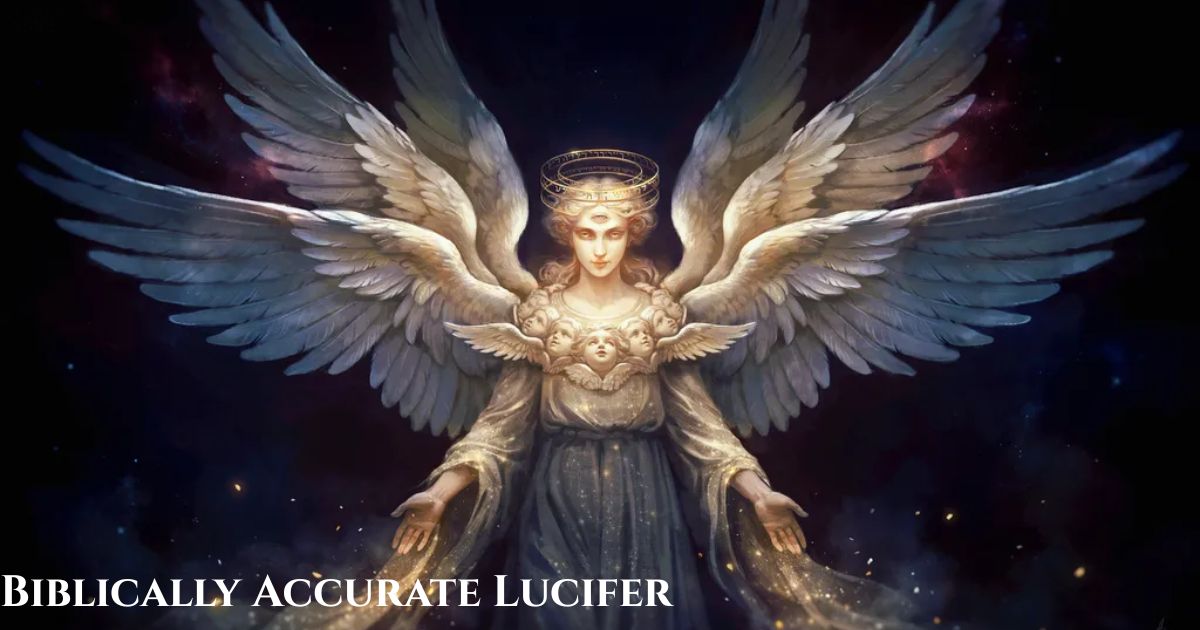
Mention “Lucifer” and most people picture a red-skinned devil with horns and a pitchfork, or a charming antihero from a TV series. Almost none of that comes from the Bible. It comes from medieval art, Renaissance poetry, and pop culture borrowing from itself.
This post pulls those layers back: what the biblical text actually says, how a Hebrew word turned into a proper name, and how art and literature took that name somewhere the original writers never intended.
Biblically Accurate Understanding of Lucifer’s Identity
“Lucifer” doesn’t appear as a name anywhere in the original Hebrew or Greek text. It’s a Latin word attached to a Hebrew phrase centuries later, which eventually got treated as a proper name in English translations. Understanding Lucifer “biblically” means tracing that journey and separating it from the tradition piled on top.
Common Misconceptions About Lucifer in Modern Culture
Pop culture has given Lucifer a full personality: tragic antihero, seductive trickster, witty rebel. None of that comes from scripture.
The biggest misconception is treating “Lucifer” as simply another name for Satan, as if the Bible presents one fully-formed villain with a long résumé. In reality, the word appears in exactly one verse in most English translations, in a chapter widely understood by scholars as addressing a human king, not a supernatural being. Most of what people “know” about Lucifer came from Dante, Milton, and medieval church art not the Bible.
What Scripture Actually Reveals About Lucifer
The single Old Testament occurrence of “Lucifer” in English Bibles is Isaiah 14:12, part of a poetic taunt against the king of Babylon, describing a once-glorious figure cast down after declaring ambitions to rise above the stars. The chapter opens by naming its subject directly: a proverb against the king of Babylon. Many scholars read this primarily as a poem about a human ruler’s pride, later interpreted by some Christian traditions as also describing a supernatural rebellion.
That dual reading matters. The “biblically accurate” picture isn’t a tidy biography of a fallen archangel it’s a contested text where translation, tradition, and poetry all overlap.
Also read: Tristan Name Meaning Bible: A Spiritual and Biblical Insight
The Hebrew Original: Helel and Its True Meaning
The actual word in Isaiah 14:12 is helel (sometimes heylel), paired with ben shachar, “son of the dawn.” Helel comes from a root meaning “to shine,” connected to the morning star what we’d call the planet Venus.
This wasn’t a proper name. It was a descriptive title for a brilliant figure whose brightness fades at dawn. It likely drew on a known Canaanite myth about a minor astral deity who tried to ascend to the throne of the high gods and was cast down a story Isaiah borrowed to mock the Babylonian king’s grandiosity.
Jerome’s Latin Vulgate and the Birth of ‘Lucifer’
“Lucifer” entered the picture in the late fourth century, when Jerome translated the Hebrew Bible into Latin for the Vulgate. Looking for an equivalent to helel ben shachar, he chose “lucifer” which is a common word meaning “light-bearer,” also used for Venus. It wasn’t a name.
Jerome’s choice was a translation decision, not a theological statement. But after a thousand years of use, the word stopped being read as a common noun and started being treated as a single, specific figure.
King James Translation and English Christian Tradition
The leap to capitalized proper noun was cemented in English largely through the King James Version of 1611. Working in a tradition already steeped in commentary linking Isaiah 14 to Satan’s fall, the KJV translators rendered the verse with a capital “Lucifer,” presenting it as a name.
Once fixed in the most influential English Bible in history, the identification stuck. Later translations like the NIV and ESV have moved back toward “morning star,” reflecting scholarly consensus that this was a title, not a name but four centuries of KJV influence is hard to undo.
Biblically Accurate Description of Lucifer’s Appearance
If “Lucifer” isn’t really a name, what about appearance? The Bible offers even less here than people assume. Most of what we “know” comes from a different chapter, applied retroactively.
Lucifer’s Pre-Fall Glory According to Ezekiel
The imagery of a jewel-covered, glorious being comes not from Isaiah but from Ezekiel 28, an oracle against the king of Tyre, describing a figure once in “Eden, the garden of God,” adorned with precious stones, blameless until pride corrupted him.
Christian tradition has long read this passage as also pointing to a supernatural fall, since the imagery seems to exceed any human king’s actual biography. Whether or not that’s the original intent, it’s this chapter not the “Lucifer” verse that supplies the beauty later art attached to the devil’s original form.
The Morning Star Imagery in Isaiah’s Prophecy
Isaiah’s contribution isn’t physical detail; it’s a single vivid metaphor. The “morning star” evokes brilliance that once outshone others, only to be extinguished. It’s poetic, not anatomical no wings, horns, or facial features. Just light and its absence.
Does Lucifer Possess Physical Form After His Fall
Scripture is notably quiet here. Even taking the traditional reading that links Isaiah 14, Ezekiel 28, and Revelation 12 into one narrative, the text never describes a physical form after the fall. It mentions a serpent in Genesis 3, a “great dragon” in Revelation 12, and a roaring lion in 1 Peter 5 but these are widely read as symbolic descriptions of character, not zoological reports.
There’s no verse describing red skin, horns, or a pitchfork. None of that has a scriptural source.
What Biblical Silence Tells Us Lucifer Is Not
The silence on appearance tells us the devil, in whatever form tradition imagines him, isn’t described with the now-iconic horror-movie features, and isn’t given a body the way named angels like Gabriel sometimes are. That absence is exactly why later centuries felt free to invent so much an empty visual space invites artists to fill it in, and they did, enthusiastically.
Symbolism and Meaning Behind Lucifer’s Role in Biblical Texts
Strip away the name confusion and missing physical description, and what’s left is symbolic weight. Across Isaiah 14, Ezekiel 28, and later references to angelic rebellion, the recurring theme isn’t appearance it’s glory collapsing through pride. The “morning star” who falls symbolizes how beauty and closeness to the divine can become exactly what corrupts a being who chooses self-exaltation over submission. The figure functions less as a fleshed-out character and more as a moral warning at cosmic scale, one later readers expanded into a much larger story.
Common Misinterpretations About Lucifer in Modern Culture
Beyond the “Lucifer equals Satan” confusion, a few other misreadings stand out. One is that Lucifer was created evil this contradicts nearly every traditional reading, which insists he was created blameless and that evil emerged through his own choice.
Another is assuming the Bible gives a tidy origin story, when the material is scattered across poetic oracles written centuries apart, never originally meant as a unified biography. People also frequently mistake Milton’s Paradise Lost for scripture, quoting its dialogue as if it appeared in the Bible.
Critical Distinction Between Lucifer and Satan in Scripture
This is the single most important clarification here: the Bible never explicitly equates the word translated “Lucifer” in Isaiah 14 with “Satan.” That equation is later interpretive tradition, not a textual statement.
Biblical Evidence Supporting Their Distinction
“Satan” (Hebrew for “accuser”) appears in books like Job and Zechariah as a title or role, functioning almost like a courtroom prosecutor rather than a named villain. Isaiah 14 never uses the word “Satan” at all, and its addressee is named explicitly as the king of Babylon. The connection is built by later readers stitching passages together, not by the biblical authors themselves.
How Christian Tradition Merged These Figures
The merger happened gradually as early Christian writers read Isaiah 14 and Ezekiel 28 typologically as texts with a deeper meaning beyond their immediate target. Origen and later church fathers popularized the idea that the Babylonian king’s fall mirrored, or even was, Satan’s own fall from heaven. By the time medieval theologians like Aquinas systematized angelology, the identification was cemented in Western Christian thought.
Protestant Reformers’ Rejection of the Equation
This wasn’t universally accepted. Some Reformation-era scholars pushed back, arguing the prophet’s plain historical target was the Babylonian king, and that turning the passage into a cosmic origin story stretched it beyond its intent. This minority view persists in scholarship emphasizing historical-grammatical interpretation over allegory.
Why This Theological Distinction Matters Today
This isn’t academic hair-splitting. Treating Isaiah 14 as a literal account of angelic uprising, versus reading it as political poetry later tradition expanded, leads to very different views of how confidently anyone can claim to know “what the Bible says” about the devil’s biography.
Biblically Accurate Account of Lucifer’s Fall and Significance
Setting the Isaiah/Ezekiel debate aside, the broader Christian tradition does describe a fall of a powerful angelic being worth laying out on its own terms.
The Narrative of the Fallen Angel in Scripture
Drawing on Isaiah 14, Ezekiel 28, and Revelation 12, the composite traditional narrative runs roughly: a perfect being existed in close proximity to God’s glory, given a position of great honor. Pride entered, leading to a desire to be exalted above God rather than to serve. Rebellion resulted in expulsion.
Lucifer’s Five ‘I Will’ Declarations of Pride
Isaiah 14:13-14 contains five striking first-person declarations: I will ascend, I will exalt my throne, I will sit enthroned, I will ascend above the clouds, I will make myself like the Most High. These lines have become, in Christian teaching, the defining portrait of pride taken to its furthest extreme not just disobedience, but the desire to occupy God’s own place.
The Nature of Sin: Pride in God-Given Perfection
What makes this narrative distinctive is that the fall didn’t originate from lack. Ezekiel 28 describes the figure as “perfect” and “blameless” until iniquity was found in him. The sin grew out of abundance, not suffering traditional theology treats this as the purest form of pride: corruption arising precisely from having been given the most.
Catastrophic Consequences of Angelic Rebellion
The consequences are framed as total: a fall “from heaven,” cast down to the lowest depths after being raised to the highest heights. Later New Testament writing ties this rebellion to ongoing spiritual conflict rather than a closed event.
The Scope of Rebellion: One-Third of Angels
Revelation 12 describes a great dragon whose tail sweeps a third of the stars from heaven language widely interpreted as a third of the angels joining the rebellion. This detail shows how much later interpretation has been layered onto a handful of symbolic verses; the “one-third” figure isn’t stated as a precise census anywhere, but it’s become fixed in popular Christian cosmology.
Artistic Evolution of Lucifer’s Image Throughout History
If the Bible gives almost no visual detail, art history gives an enormous amount and watching that imagery shift over centuries tells you more about each era’s anxieties than about scripture.
Early Medieval Period: The Ethereal Blue Angel
In the earliest Christian art, the fallen angel was often depicted as simply another angel beautiful, sometimes shown in cool blue tones, distinguished mainly by posture rather than monstrous features. The emphasis was on what had been lost.
High Medieval Transformation to Grotesque Forms
By the High Middle Ages, especially from the twelfth century onward, the imagery shifted toward the monstrous: horns, bat-like wings, claws, dark or reddish coloring, blending classical satyrs and folklore demons. This era effectively invented the visual vocabulary most people still associate with “the devil” today.
Renaissance Romanticization: Milton’s Tragic Rebel
The Renaissance added psychological depth. John Milton’s Paradise Lost (1667) reimagined the fallen angel as a tragic, charismatic rebel eloquent and possessed of a doomed grandeur. Milton’s famous line about reigning in hell rather than serving in heaven gave the character an interior life scripture never provides, and this literary version is the direct ancestor of the “sympathetic devil” trope in modern fiction.
Victorian Era Through Modern: The Theatrical Red Devil
The nineteenth century onward leaned into theatricality: stage productions, illustrated Bibles, and film cemented the red-skinned, horned figure as instantly recognizable shorthand, almost entirely disconnected from scripture.
Contrasts Between Artistic and Biblical Portrayals
Lined up side by side, the contrast is stark. The Bible offers a few lines of poetic metaphor about light and a fall. Art and literature offer detailed physical descriptions, personalities, even a signature weapon. Almost none of the iconic imagery has scriptural origin it’s the product of over a thousand years of invention layered onto a handful of ambiguous verses.
Theological Insights from a Biblically Accurate Lucifer
Beyond the historical detective work, this material raises real theological questions traditions have wrestled with for centuries.
The Paradox of Created Perfection and Free Will
If this being was created good, how does evil arise from within perfection? Traditional theology answers through free will: genuine moral freedom requires the real possibility of choosing wrongly, and a perfect creature with will still retains the capacity to turn away from its maker. The fall isn’t a flaw in the design, it’s a consequence of the freedom the design required.
The Origin of Evil Within a Perfect Being
This connects to one of the oldest problems in theology: how evil originates in a universe created entirely good. The traditional answer locates evil not as a “thing” with independent existence, but as a turning away from proper relationship with God, originating in the creature’s will rather than in anything God made.
Pride’s Specific Temptation: Giftedness and Position
Across Isaiah 14 and Ezekiel 28, the temptation isn’t generic, it’s tied to giftedness, beauty, and elevated position. The lesson many traditions draw: the very things that mark someone as exceptional can become exactly the soil where pride takes root, often more easily than hardship would produce.
Cosmic Implications: Corrupting Others and Spiritual Warfare
The “one-third of the angels” imagery and later references to ongoing spiritual conflict extend the story beyond one individual’s fall: a rebellion that drew others in, framed as continuing rather than resolved. This shifts the narrative from an isolated failure to something with wider ripple effects.
Lessons for Humanity: Humility and Dependence on God
Strip away the angelology, and most traditions land on a consistent takeaway: pride rooted in real gifts is treated as spiritually dangerous precisely because it’s so easy to justify. The fall narrative functions in Christian teaching primarily as a caution toward humility, regardless of how much someone has actually achieved.
Last Words
Pull this story apart and what’s left is genuinely interesting: a Hebrew phrase about a morning star, originally applied to a human king’s downfall, translated into Latin by a fourth-century scholar using an ordinary word for “light-bearer,” later capitalized into a proper name by English translators, and finally dressed up by painters and poets into the horned, red-skinned figure most people picture today.
None of that makes the topic less worth taking seriously. It just means the “biblically accurate” version is far stranger and sparser than the popular image and arguably more interesting, given how much restraint the original text shows compared to everything later centuries added.
Frequently Asked Questions
Is Lucifer actually a name used in the original Bible?
No. The word comes from the Latin translation of a Hebrew phrase meaning roughly “shining one” or “son of the dawn.” It was a descriptive title in the original language, only later capitalized as a name in English translations.
Are Lucifer and Satan the same figure in scripture?
The Bible never directly states this equation. It’s a theological interpretation that developed in early Christian tradition, linking Isaiah 14 and Ezekiel 28 with later references to a rebellious accuser figure.
Does the Bible describe what Lucifer looks like?
Not in physical detail. Isaiah uses light-based metaphor (a fading morning star); Ezekiel describes pre-fall splendor in a passage about a human king widely read as carrying a secondary, symbolic meaning. There’s no biblical basis for horns, red skin, or a pitchfork.
Where did the popular image of a red devil with horns come from?
Almost entirely from medieval and later European art, which blended classical mythological imagery (like satyrs) with folklore and theatrical tradition from the twelfth century onward, plus the lasting influence of Milton’s Paradise Lost.
Why does the distinction between Lucifer and Satan matter?
It affects how confidently anyone can claim to know “the Bible’s account” of the devil’s biography, and highlights how much popular religious imagery comes from later tradition rather than the original text.
What is the core lesson Christian tradition draws from this narrative?
Most traditions read it as a warning about the spiritual danger of pride, particularly pride rooted in genuine talent or position, rather than as a horror story. The emphasis falls on humility and dependence on God rather than the supernatural details themselves.

Amelia Mia is a passionate digital creator and the driving force behind a dynamic general-niche website that delivers diverse, engaging, and informative content. With a strong focus on quality and user value, Amelia curates topics that resonate with a broad audience, from technology and lifestyle to trending insights.